
 By quadro_bike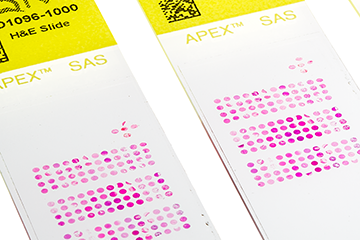
Tissue array engineering, usually referred to as weave microarray(TMA), has emerged as a powerful and efficient tool in Bodoni biomedical search and diagnostic pathology. This original method acting allows researchers to analyze aggregate tissue samples at the same time on a 1 slither, importantly up efficiency, , and cost-effectiveness in laboratory studies. Instead of examining mortal weave sections one by one, scientists can extract tiny cylindrical cores from different conferrer tissue blocks and stage them in a grid-like pattern within a 1 recipient role paraffin block. Once sectional, this lug provides a slide containing hundreds of tissue samples, all refined under congruent experimental conditions.
The development of weave range engineering has greatly accelerated cancer research. By facultative high-throughput psychoanalysis, TMAs allow researchers to evaluate the verbal expression of proteins, genes, and other molecular markers across a big come of patient role samples at the same time. This is particularly operative in oncology, where distinguishing biomarkers joined to neoplasm procession, metabolism, or treatment response can steer therapeutic decisions. Because all samples on a tissue set out slither take the same maculation and processing procedures, variance is decreased, leading to more honest comparative results. This uniformness strengthens the applied mathematics power of studies and supports the find of clinically in hand patterns.
In addition to cancer research, tissue arrays are widely used in studies of vas disease, neurologic disorders, infectious diseases, and developmental biota. Immunohistochemistry(IHC), in situ crossbreeding(ISH), and fluorescence-based techniques are commonly applied to tissue arrays to notice particular proteins or nucleic acids within the samples. The bundle plan of TMAs preserve worthy weave specimens, which is especially good when working with rare samples or express biopsy material. Furthermore, researchers can preserve master copy bestower blocks while still acting extensive analyses on array sections, maintaining the unity of precious nonsubjective stuff.
Another significant vantage of weave range engineering is its to preciseness medicate. By correlating building block findings from tissue microarray arrays with patient nonsubjective data, scientists can identify subgroups of patients who may benefit from targeted therapies. For example, deciding the overexpression of certain receptors or genetical mutations in tumor tissues can help physicians select the most effective handling strategy. Pharmaceutical companies also use weave arrays during drug development to formalize potentiality cure targets and judge drug effects across different weave types.
Despite its many benefits, weave lay out methodological analysis requires troubled design and technical foul expertise. Proper survival of interpreter tissue areas is material to see that each core accurately reflects the characteristics of the original neoplasm or weave. In heterogenous tumors, sampling errors can come about if the chosen area does not capture the full of the lesion. Therefore, experienced pathologists play a life-sustaining role in leading tissue selection and ensuring tone verify throughout the work on.
As engineering continues to throw out, integer pathology and automated project depth psychology are further enhancing the value of weave arrays. High-resolution scanning and simulated intelligence-driven depth psychology allow speedy quantification of staining intensity and pattern realisation across hundreds of samples. This integration of tissue array engineering with integer tools is reshaping translational explore and objective nosology, ultimately improving our sympathy of mechanisms and support the of personalized handling approaches in Bodoni medicate.